MUIZENBERG
PROMENADE
ENHANCEMENT
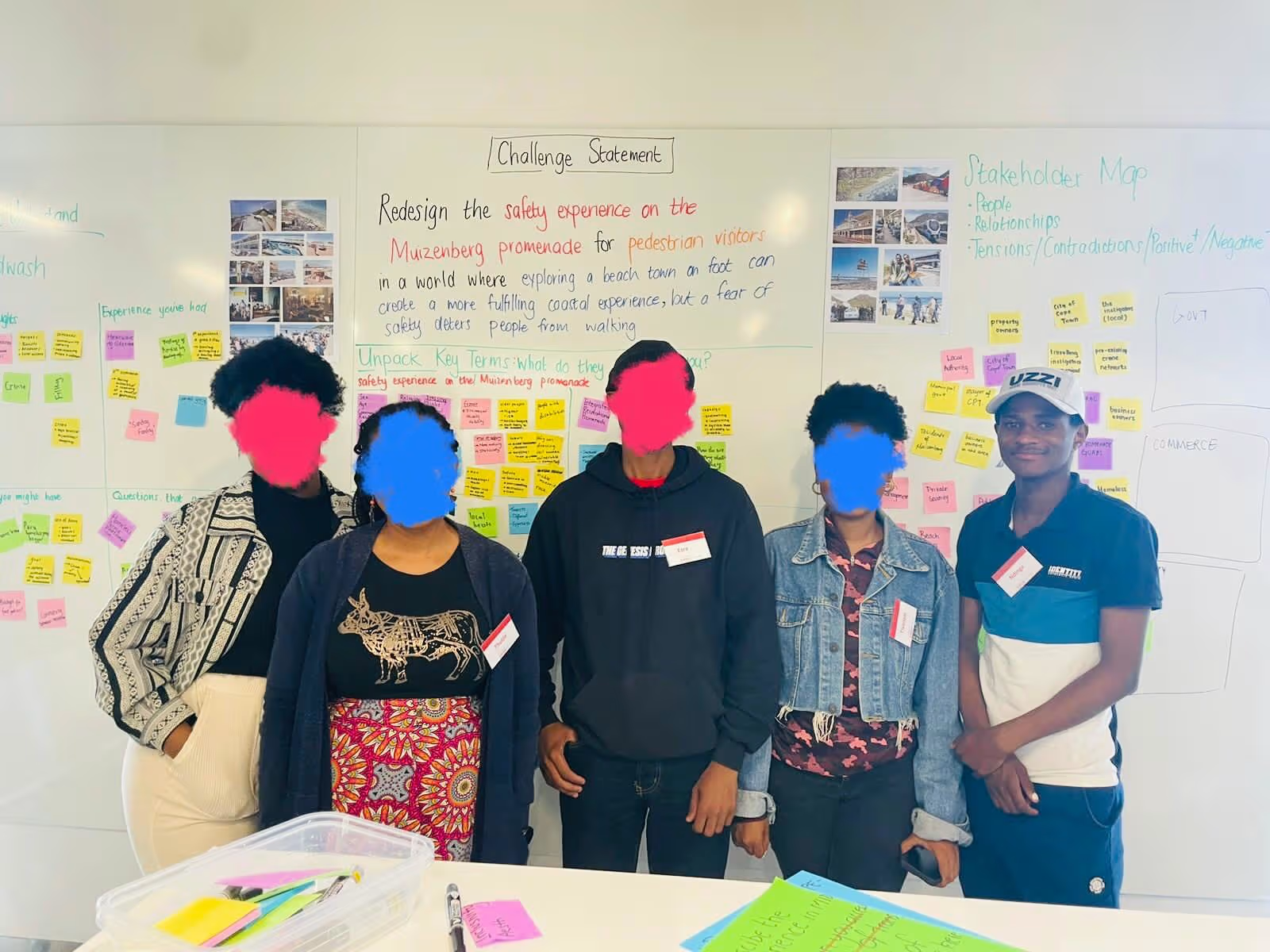
I, Ndinga Dyongo, participated in the UCT Design Thinking Week Challenge, tackling the Muizenberg Promenade Enhancement brief. Working within a multidisciplinary team under tight time constraints, we applied the full design thinking process — from empathic observation to rapid prototyping — to address real physical access barriers and social equity challenges.
Our solutions addressed physical access barriers and also contributed to making Muizenberg a more inclusive, welcoming destination for all visitors — aligning with principles of universal design and social equity.
The skills, processes, and disciplined frameworks applied in that challenge — particularly translating lived-experience insights into human-centered outcomes under pressure — are the same foundation driving this ShopRite case study.
Developed ability to translate lived-experience insights into tangible, human-centered design outcomes under tight time constraints
Sharpened multidisciplinary team collaboration — aligning diverse perspectives toward coherent service solutions
Grounded in universal design principles — ensuring solutions serve the most vulnerable first
Demonstrated constraint-driven creativity — producing viable, real-world proposals within strict workshop parameters
Applied structured design frameworks (Triple Diamond, 8Ms) in both challenges to ensure rigour and measurability
Overview
ShopRite Money Market kiosks are essential community infrastructure across South Africa — serving customers who buy bus tickets, play the lottery, pay life insurance premiums, and send money across the continent. But a broken queue system is quietly destroying the customer experience every single day.
While many services exist online, a significant portion of customers cannot access or rely on digital platforms — making the physical kiosk their only option.
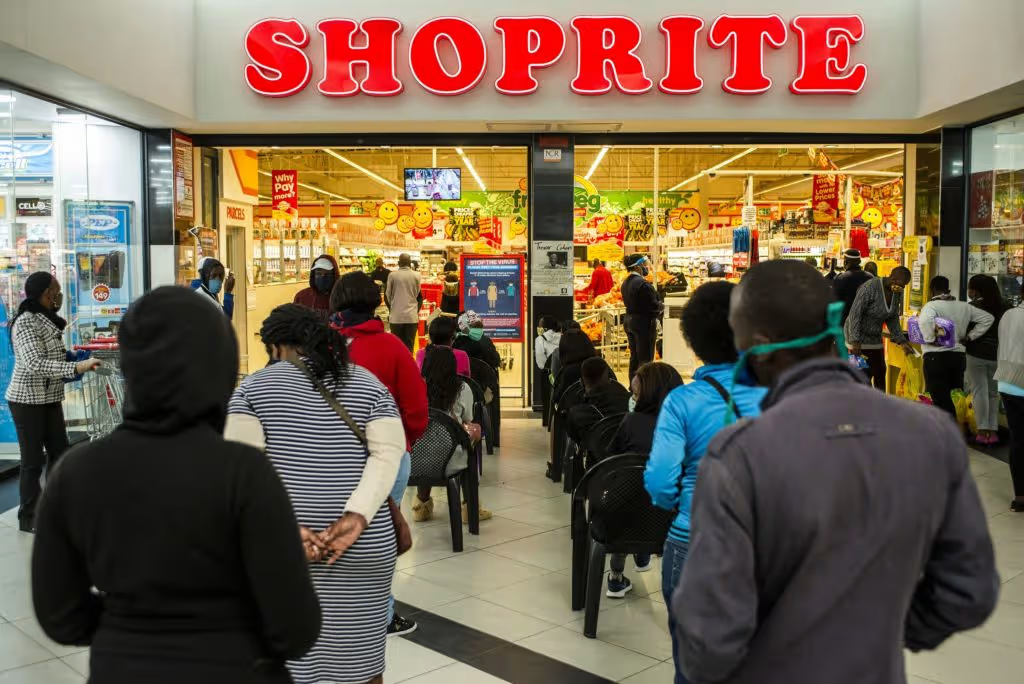 Daily queue — current state
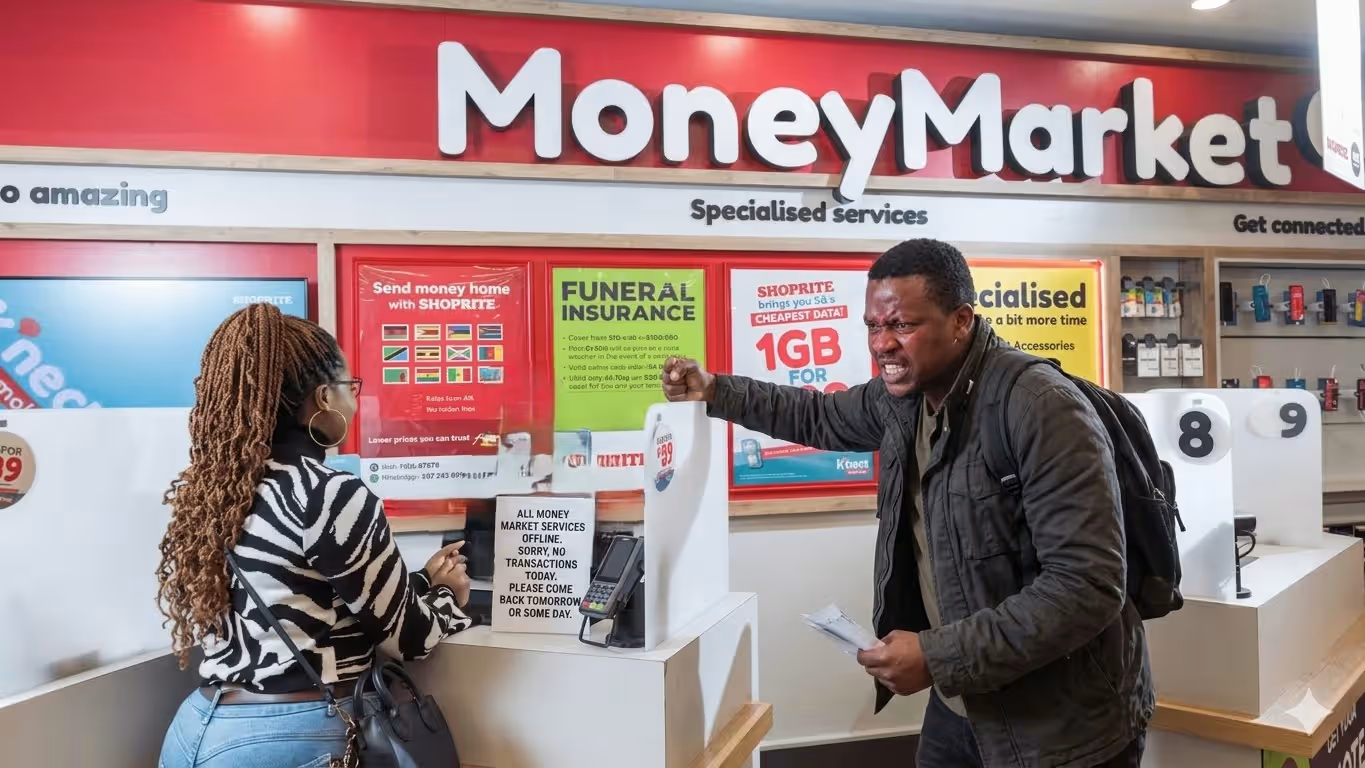 Customer turned away at counter
 ShopRite Money Market kiosk services
The Kiosk
The Money Market kiosk is not merely a convenience feature — it is the primary financial access point for a significant segment of South African society who cannot or choose not to use digital banking platforms.
 Bus & travel tickets
 Lottery / lotto
 Life insurance payments
 Cross-border money transfers
 Electricity, Vouchers & utilities
 Other financial services
While ShopRite offers mobile apps and online platforms for many services, a significant portion of customers — especially senior citizens and non-tech-savvy individuals — still depend entirely on the in-store kiosk for every transaction.
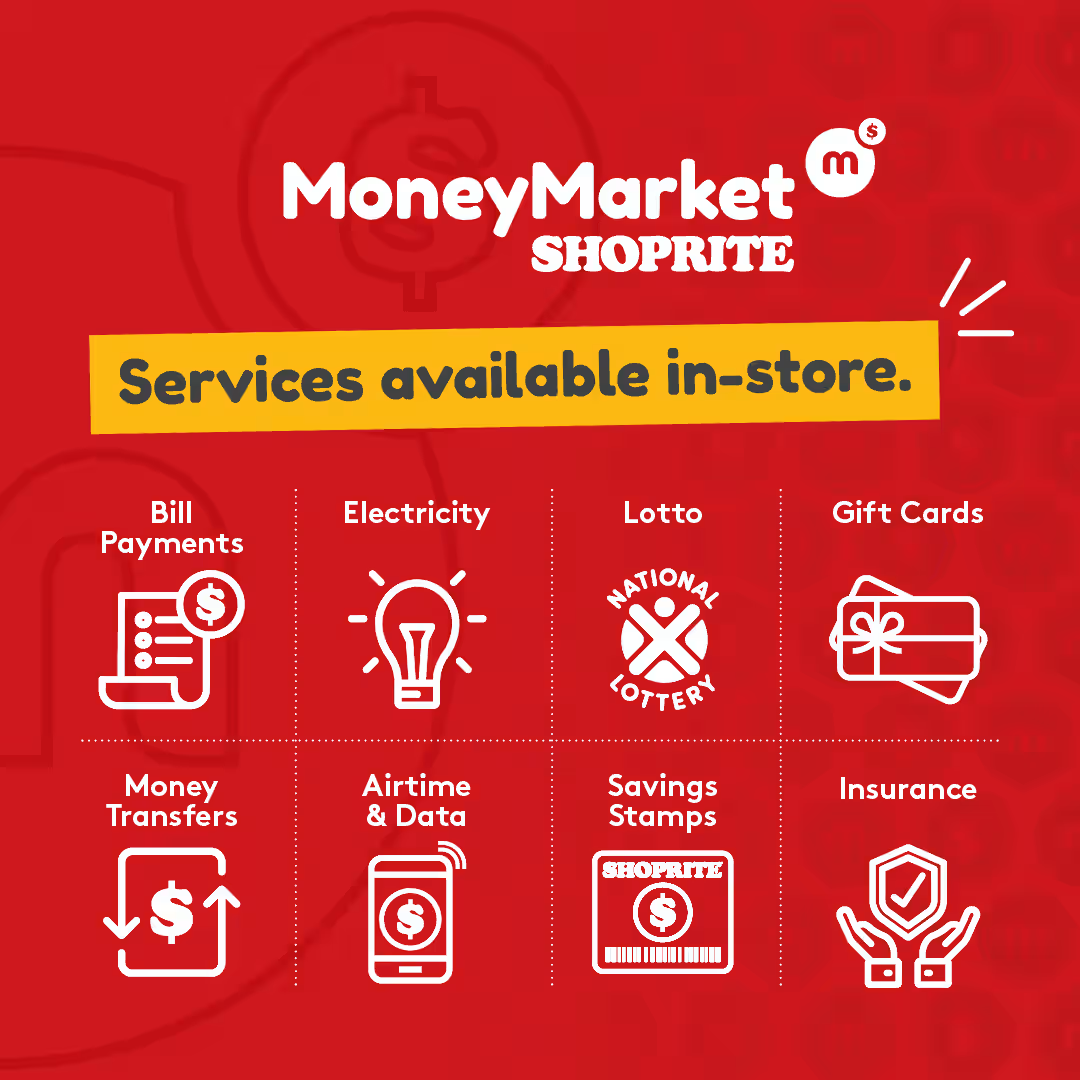 In-store kiosk — service counter overview
The Problem
The current system fails customers at the most critical moment — after they have already waited. The blind queue model means no one knows whether a service is available until a customer physically reaches the teller window.
Long standing queue — blind, uninformed
Customer turned away — service offline
The Solution
Reserved Designs Studio proposed solution requires no new technology or invention — only the adoption of a customer-flow process already proven by major South African banks. A trained greeter and a compact point-of-service machine at the entrance transform the entire experience before a single customer joins a queue.
THE TRIPLE DIAMOND
APPROACH
Industry-standard design thinking framework — three phases, three diamonds, one coherent solution
The Triple Diamond is an evolution of the Double Diamond (British Design Council), extending the diverge-converge rhythm into three sequential phases: Research → Experiment → Deliver. Each diamond opens with exploration (divergence) and closes with a decision (convergence). This structured yet flexible process was applied rigorously to the ShopRite queue problem — ensuring the solution emerged from evidence, not assumption.
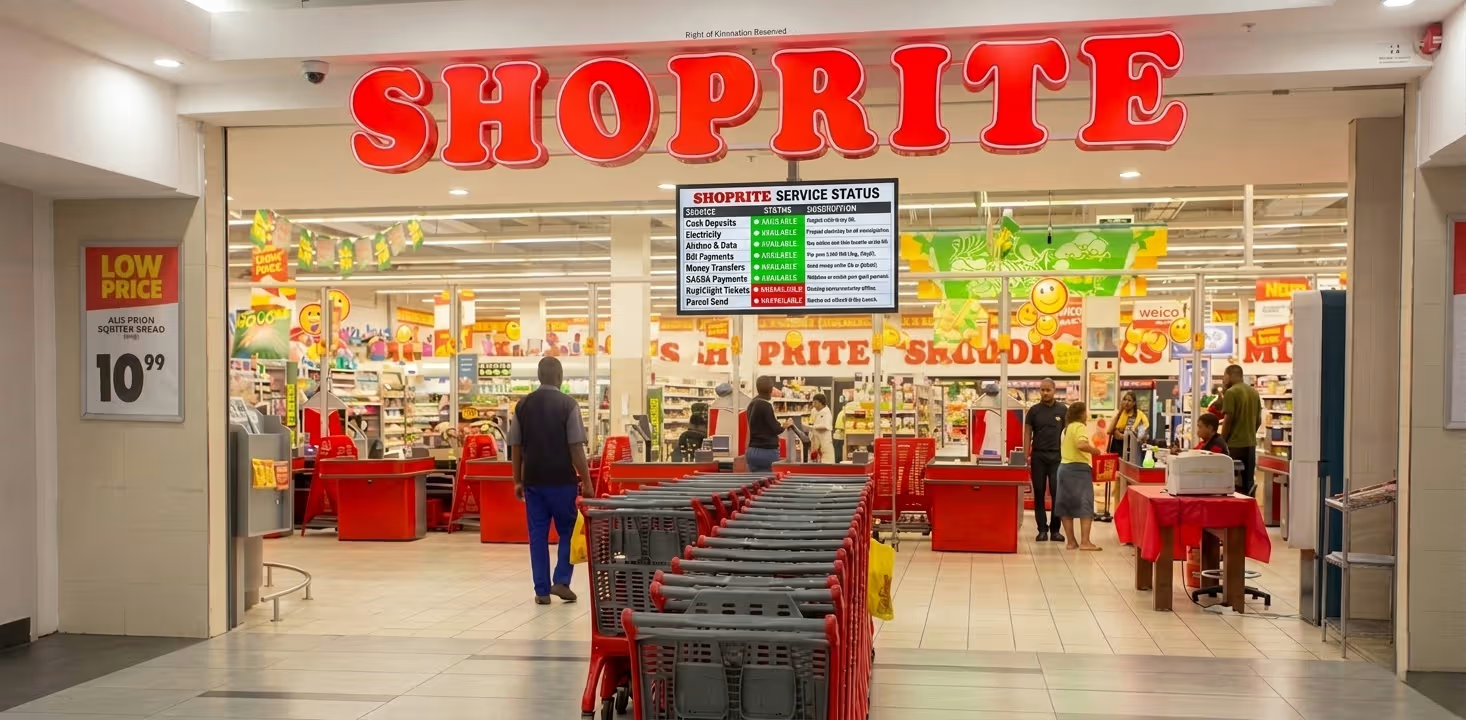 Available & unavailable services clearly displayed
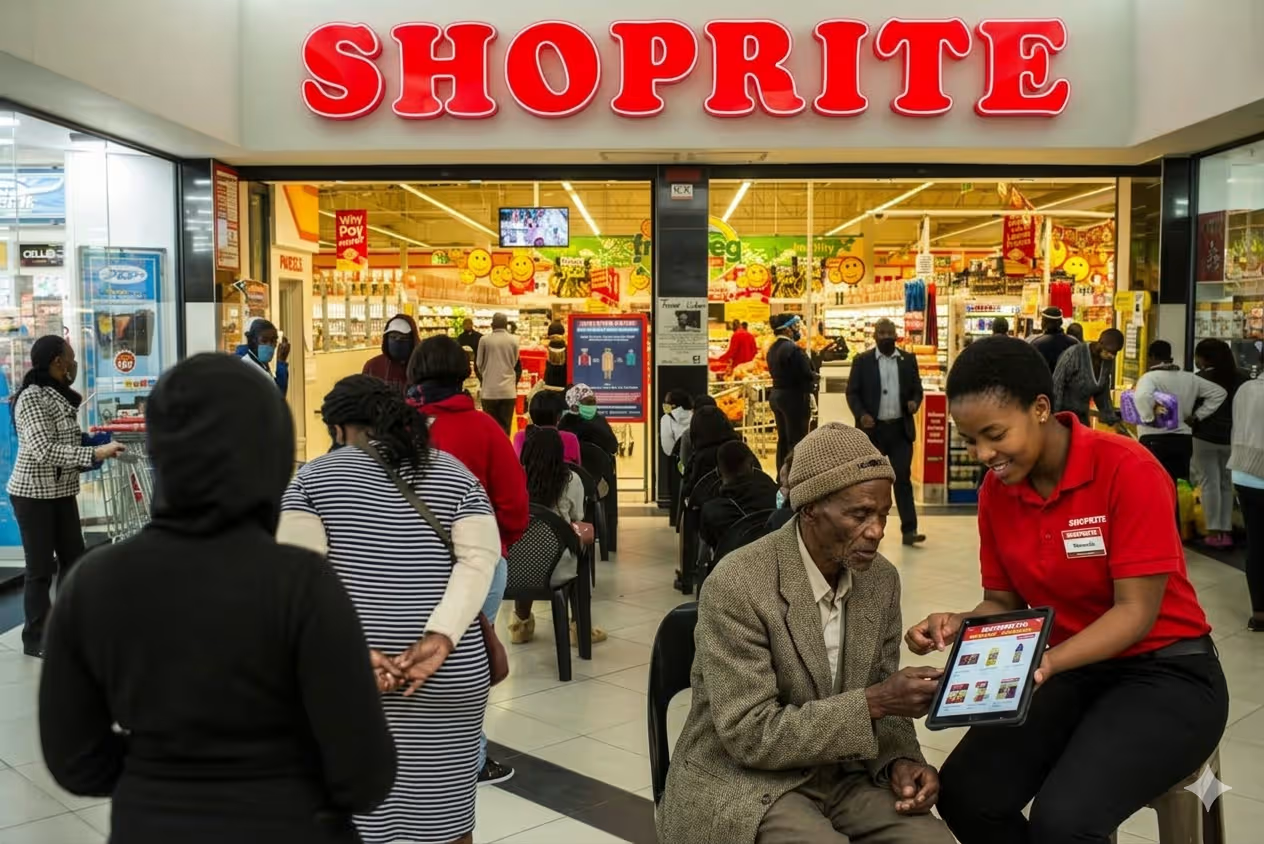 Assisting customers without even reaching the counter
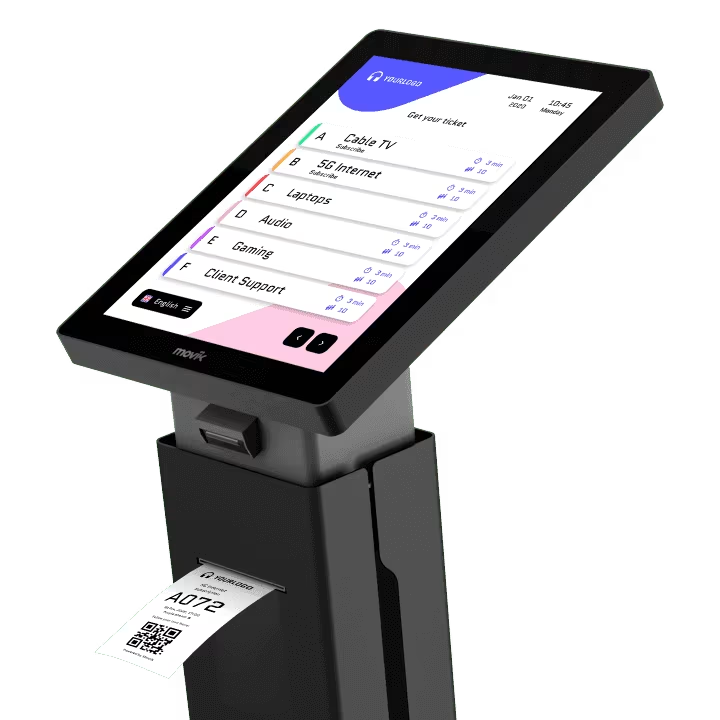 Numbered ticket — confirmed service
REFERENCES:
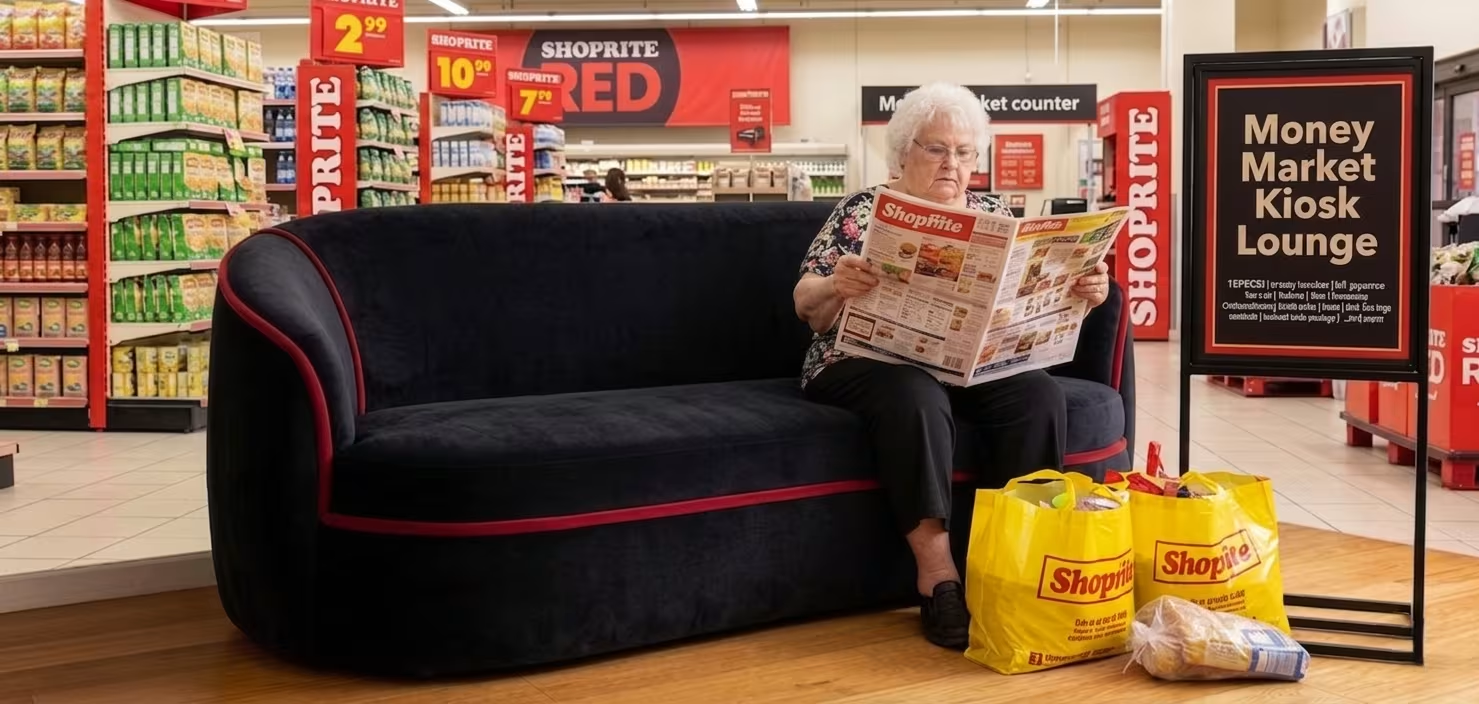 Redesigned waiting area — seated, informed, dignified
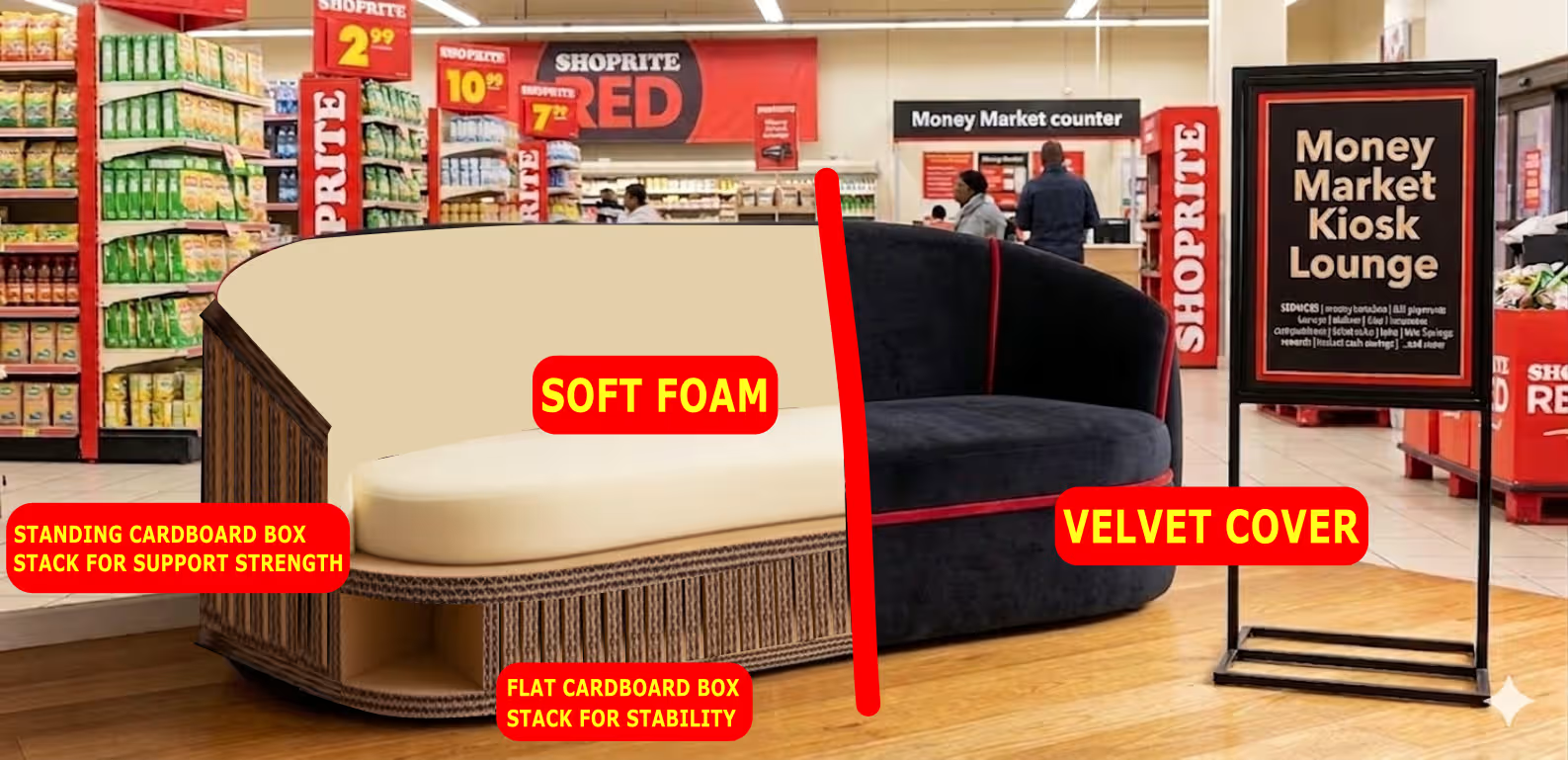 Eco Lounge seating — lightweight, sustainable, comfortable
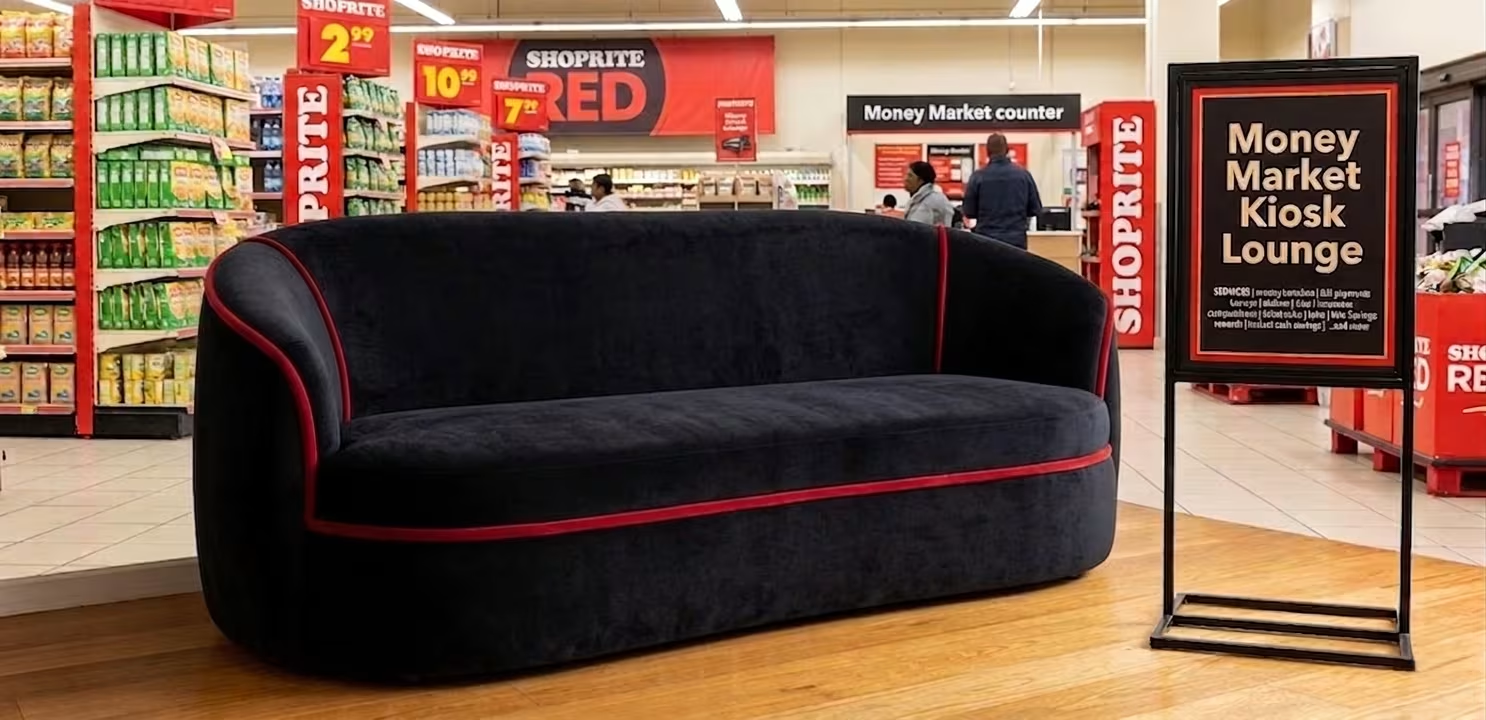 Sofa Concept
Key Benefits
This approach transforms the blind-queue experience into a professional, respectful, and efficient service model — delivering meaningful improvements for customers, tellers, and the ShopRite brand simultaneously.
8Ms ANALYSIS
How the framework was applied to assess performance, efficiency, and waste reduction
The 8Ms Framework — drawn from Ishikawa / Cause-and-Effect analysis methodology, widely used in lean operations and service design — was applied to evaluate the ShopRite Money Market queue solution across every operational dimension. Each "M" was assessed in its current (broken) state and its proposed (redesigned) state to measure the delta in performance, efficiency, and waste.
For each M, three questions were applied: (1) What is currently failing or wasted? (2) What does the solution activate or change? (3) What is the measurable or observable outcome? This structured assessment ensures every solution component is justified beyond aesthetics — grounded in operational logic.
| THE 8M | CURRENT STATE — WASTE / FAILURE | SOLUTION ACTIVATION | OUTCOME | ACTIVATION |
|---|---|---|---|---|
| MANPOWER Skills, training & human resources | Tellers spend time managing frustrated customers who waited to discover offline services. No dedicated greeter role exists. Staff lack protocols for proactive outage communication. Customer-facing skills are underutilised at the point of highest impact. | Friendly Buddy greeter role created. Trained in service availability communication, digital assistance, and customer de-escalation. Tellers freed from queue management — focused purely on transactions. Fast-track training protocol modelled on bank branch greeter programmes. |
Teller throughput ↑
Customer-facing skills deployed at entry
Frustration-management burden ↓
|
FULLY ACTIVATED |
| MACHINERY Equipment, technology & tools | No service-status display exists. No ticketing system at entry. No digital tool at point of entry. Customers and tellers operate with zero real-time service information. The kiosk's own infrastructure is not used to communicate its own operational state. | Service availability monitor deployed at entrance. Ticketing kiosk (Moviik-type) introduced — issues confirmed-service tickets only. Greeter equipped with iPad for digital resolution. All three are low-cost, commercially available, and already deployed in banking environments nationally. |
Real-time service visibility: ON
Ticket = service guarantee
iPad resolves pre-counter queries
|
FULLY ACTIVATED |
| MATERIALS Raw resources, inventory & supply chain | No seating materials exist in the queue area. Customers — particularly the elderly — stand for up to 60 minutes on hard retail floors. No tactile or physical signal differentiates a queue for one service from another. Physical environment reinforces the blind, undifferentiated queue. | Eco-Lounge cardboard-frame sofas introduced. Sourced from repurposed industrial cardboard — abundant, low-cost, local. Sofa units are lightweight, modular, and replaceable. Minimal supply chain complexity — no specialist manufacturing required. Ticket paper stock for the ticketing kiosk is the only ongoing consumable. |
Seating available: dignified wait
Material cost: low (cardboard)
Replenishment: simple
|
FULLY ACTIVATED |
| METHODS SOPs, processes & workflows | No Standard Operating Procedure exists for outage communication. Tellers have no established protocol for informing customers of service unavailability before they reach the counter. Queue management is entirely reactive — action only occurs when a customer is already disappointed. | New service SOP introduced: (1) Monitor updated when any service changes state. (2) Greeter briefs customers at entry. (3) Tickets issued only for confirmed services. (4) Tellers follow escalation protocol for extended outages. Process modelled on Standard Bank and FNB branch queue management SOPs — adaptation, not invention. |
Proactive > reactive service
Queue entry = informed decision
Outage handling: structured
|
FULLY ACTIVATED |
| MEASUREMENT KPIs, tracking & evaluation metrics | No KPIs exist for queue efficiency, wasted visits, or service availability uptime. ShopRite has no visibility into how many customers are turned away per day per outage. The problem is invisible in operations data — making it impossible to manage or report. | KPI suite introduced: (1) Wasted visits per outage event. (2) Wait-to-service conversion rate. (3) Customer Satisfaction Score (CSAT) at exit. (4) Average queue-to-counter time. (5) Service uptime % per kiosk. Ticketing system provides automatic count data. 1-month pilot at 3 locations generates baseline for national rollout decisions. |
Wasted visits: measurable
CSAT: trackable
Rollout: data-driven
|
ACTIVATED (PILOT) |
| MOTHER NATURE Environmental impact & sustainability | No sustainability consideration in current queue setup. Hard retail flooring with no seating creates physical discomfort that amounts to a hostile environment for elderly and disabled users. No materials reuse or eco-conscious design present in the service zone. | Eco-Lounge uses repurposed cardboard construction — a circular economy application that diverts waste material from landfill into functional furniture. Lightweight units reduce transport emissions. The waiting environment is transformed from hostile (standing, uninformed) to comfortable and dignified. Universal Design principles applied — supporting physical accessibility and inclusion. |
Cardboard → functional furniture
Waste diverted from landfill
Inclusive environment created
|
FULLY ACTIVATED |
| MANAGEMENT Leadership, strategy & supervision | No management ownership of queue efficiency as a customer experience metric. Outage communication has no escalation chain. Store managers have no real-time dashboard of service states. Queue problems are reported anecdotally, if at all — making structural change difficult to justify or budget. | Management visibility introduced: Service state monitor creates a shared source of truth for store manager, tellers, and greeter simultaneously. KPI dashboard enables district managers to track pilot outcomes. Greeter reports to store manager daily on queue observations. Rollout decision-making is grounded in pilot data, not anecdote — making the business case transparent and defensible. |
Shared service state dashboard
Manager accountability: enabled
Business case: evidence-based
|
ACTIVATED (PILOT) |
| MONEY Financial resources, capital & budgets | Wasted customer visits represent invisible revenue leakage — customers who leave without transacting don't return that day, and some do not return at all. Brand trust erosion among high-frequency users (senior citizens, low-income households) compounds the revenue impact over time. No budget has been allocated because the problem has never been quantified. | Low capex implementation: All components use commercially available, off-the-shelf equipment already proven in banking. Eco-Lounge sofas are built from low-cost materials. 1-month pilot at 3 locations provides ROI data before national commitment. Estimated ↓60% reduction in wasted visits translates directly to increased daily transaction volume — generating measurable revenue upside at minimal cost. |
Capex: low
Transaction volume: ↑ (projected)
ROI: measurable post-pilot
|
FULLY ACTIVATED |
All 8 dimensions are addressed and activated by the solution. Six Ms are fully activated at launch (Manpower, Machinery, Materials, Methods, Mother Nature, Money). Two Ms (Measurement, Management) are activated but scale to full deployment only after the pilot generates operational data — a deliberate, responsible sequencing choice that de-risks the national rollout.
PERFORMANCE
OUTCOMES
Projected impact across every stakeholder group
Customers wait with purpose — they hold a number and have confirmed their service is available. This single change dramatically reduces frustration and increases trust in the ShopRite brand at every visit. The psychological shift from "I might be wasting my time" to "my place is confirmed" cannot be overstated — particularly for customers whose time and transport costs are precious.
Rollout Plan
Because this system is already proven in South African bank branches, rollout is adaptation rather than invention. Implementation can be phased across ShopRite's existing store network rapidly and at low cost — with minimal disruption to daily operations.
 Greeter staff training session
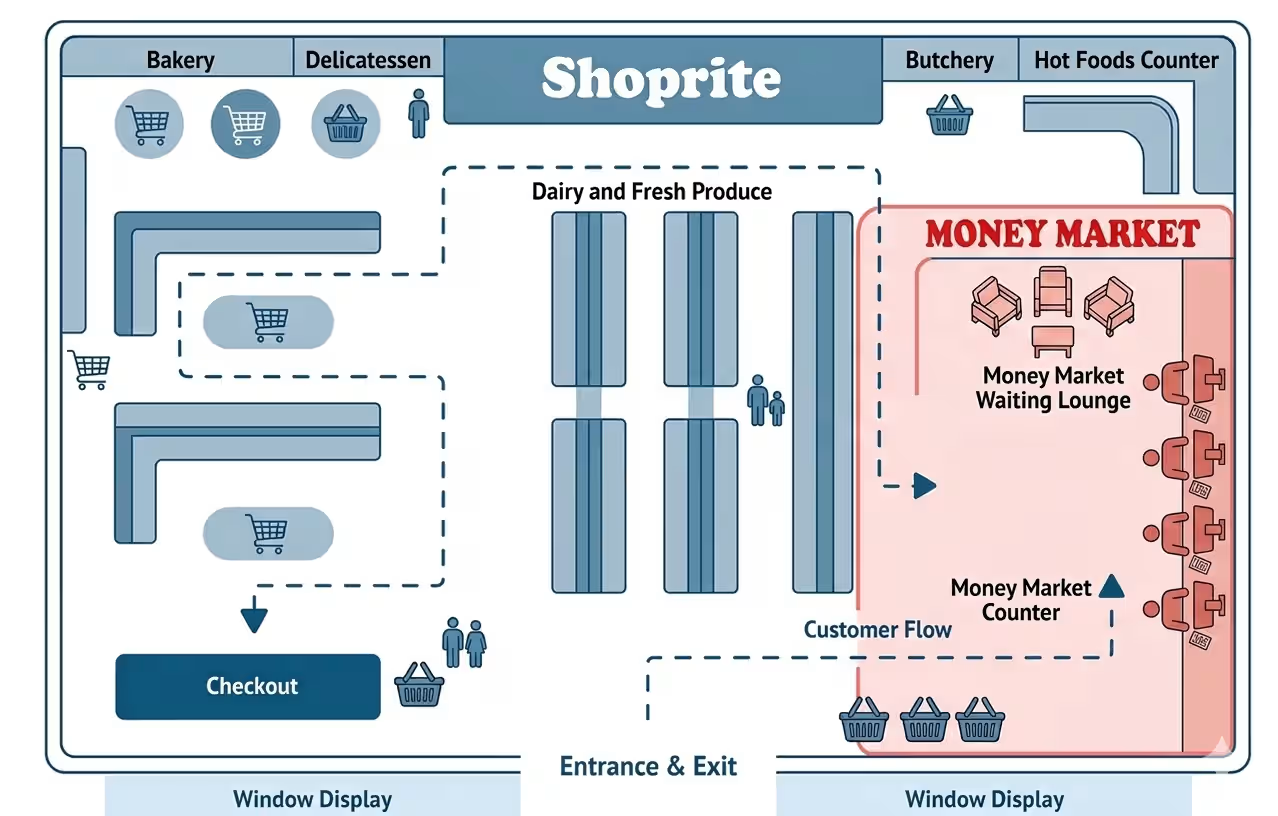 Entry greeter zone — layout design
Expected Impact
Every metric below is based on outcomes already observed in South African banking environments using equivalent queue management systems. This is not speculative — it is a proven model applied to a new and equally deserving context.
DISCLAIMER
This case study is an independent conceptual design exploration created for research, design-thinking, and customer experience analysis purposes only.
Some visuals, mockups, renderings, scenarios, names, environments, or representations within this case study may include artificially generated or conceptual imagery intended solely to communicate ideas, user experiences, and proposed solutions. Such visuals should not be interpreted as factual representations, official business material, operational realities, endorsements, or direct depictions of the businesses or individuals mentioned.
The purpose of this case study is not to expose, defame, attack, discredit, harm, or negatively portray any company, brand, institution, employee, or individual referenced. Instead, it is intended to highlight potential customer pain points, accessibility challenges, and service-experience opportunities that may exist within broader industry environments.
We are not affiliated with, endorsed by, sponsored by, employed by, or officially connected to the businesses, organizations, or individuals mentioned in this case study unless explicitly stated otherwise. Any trademarks, company names, or references remain the property of their respective owners and are used strictly for commentary, educational, conceptual, research, portfolio, and design-thinking purposes.
This work represents speculative problem-solving and user-experience exploration from an independent design perspective. The observations, concepts, and proposed solutions presented may also apply broadly across similar businesses or industries and should not be interpreted as statements of fact regarding any specific company's operations, policies, or service standards.
All opinions, concepts, and design proposals contained herein are presented in good faith and without malicious intent.
If any referenced business, organization, or authorized representative believes that content within this case study is inaccurate, inappropriate, misleading, infringes rights, or should be removed, we encourage direct communication with us. We are open to constructive engagement and reserve the willingness to review, amend, clarify, or voluntarily remove content where reasonably necessary.
This case study is published in the spirit of innovation, accessibility improvement, customer-centered design, and public-interest design exploration.